

On my second day in Egypt, I wrote a sentence that has not left me since.
“There are places where time folds. Egypt is one of them.”
At the time, I thought I was describing a feeling. The kind of feeling you get when stone seems to hold memory, when silence feels older than language, when you realize you are not just traveling through geography, but through centuries.
That day, standing before the Great Pyramid, I framed it as a kind of “day zero” engineering. Pioneer work. Spiritual architecture. A belief system encoded in geometry. I was trying to name the human impulse behind permanence.
We are born. We fear death. We build something that might outlast us.
Back then, I thought the pyramid was the center of the story.
Now I see it differently.
After I returned to New York, I wrote more than a dozen essays about Egypt. I thought I had processed what I learned. Then I began writing my Engineering Greatness series, and Egypt stopped being only history or wonder. It became a new lens.
In the first three essays, I worked through space at three scales of reality.
Micro. The human scale, where daily life happens.
Meso. The middle layer, where systems and roles shape outcomes.
Macro. The big picture, where ambition reaches for stars.
Space matters. But space is only half the story.
Space tells you where greatness stands.
Time tells you whether it deserves to remain.
That is why, after writing about space, I needed to write about time.
The Met’s Divine Egypt exhibit gave me the doorway. Not because ancient Egypt was the origin story of engineering that somehow leapt to pyramids. That is not the point I want to emphasize.
The deeper point is quieter and more useful.
Ancient Egyptians may be among the earliest humans who truly accepted the ultimate reality of nature, time, death, and uncertainty.
Instead of fighting it, they designed with it for continuity.
That, to me, is engineering greatness.
Let Time Be the Load Case
Engineers do not negotiate with gravity.
We do not argue with it. We do not take it personally. We design with it.
Time is the same.
Time applies pressure.
It fatigues materials. It exposes weak joints. It humbles big talk.
If your definition of greatness depends on staying shiny forever, time will remove the shine.
If you want greatness that lasts, you do not chase permanence. You design for endurance. That means you stop trying to control what you cannot.
Here is a simple frame I borrow from Mel Robbins.
Let Them. Let Me.
Let time be real. Let it test you. Let it reveal what is fragile. Then let me build with it.
Let time test you. Let time reveal you. Then build the kind of life, and the kind of work, that can take the test.
One more truth belongs here. Good design does not prevent loss. It reduces catastrophic failure. It gives you a way to recover with integrity when reality hits anyway.
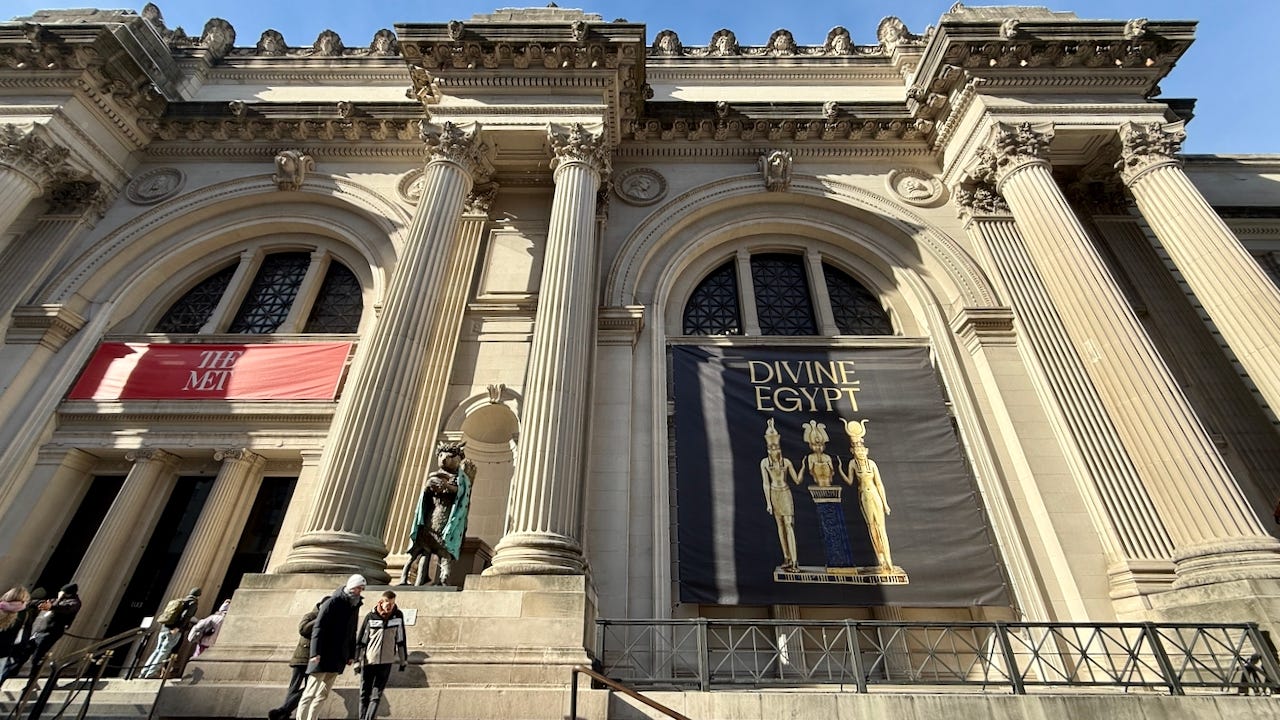
Divine Egypt
In ancient Egypt, images of gods were not treated as art. They were treated as activation.
The statue was not a reminder. It was an interface.
A way for the unseen to enter the seen.
They understood something we still resist.
There are forces you cannot fight as an individual. Time. Death. Randomness. Uncertainty. Other people’s reactions. Outcomes.
So they did not try to dominate those forces. They built ways to live with them.
They created repeatable practices. Symbols, rituals, festivals, offerings. These practices brought meaning into daily life and held continuity across generations.
In modern language, you could call that simulation.
Not engineering jargon simulation.
Human simulation.
A safe, repeatable rehearsal with guardrails so reality does not have to teach you everything the hard way.
Here is what that looks like in ordinary life.
Before a difficult conversation, I often run a small simulation.
I write down the one outcome I am tempted to control, and I label it Let Them.
Then I write down what I can actually design, and I label it Let Me.
One question I will ask.
One boundary I will hold.
One pause I will take before I react.
The conversation still goes where it goes. But I show up with structure, not wishful thinking.
That is the point.
Not control.

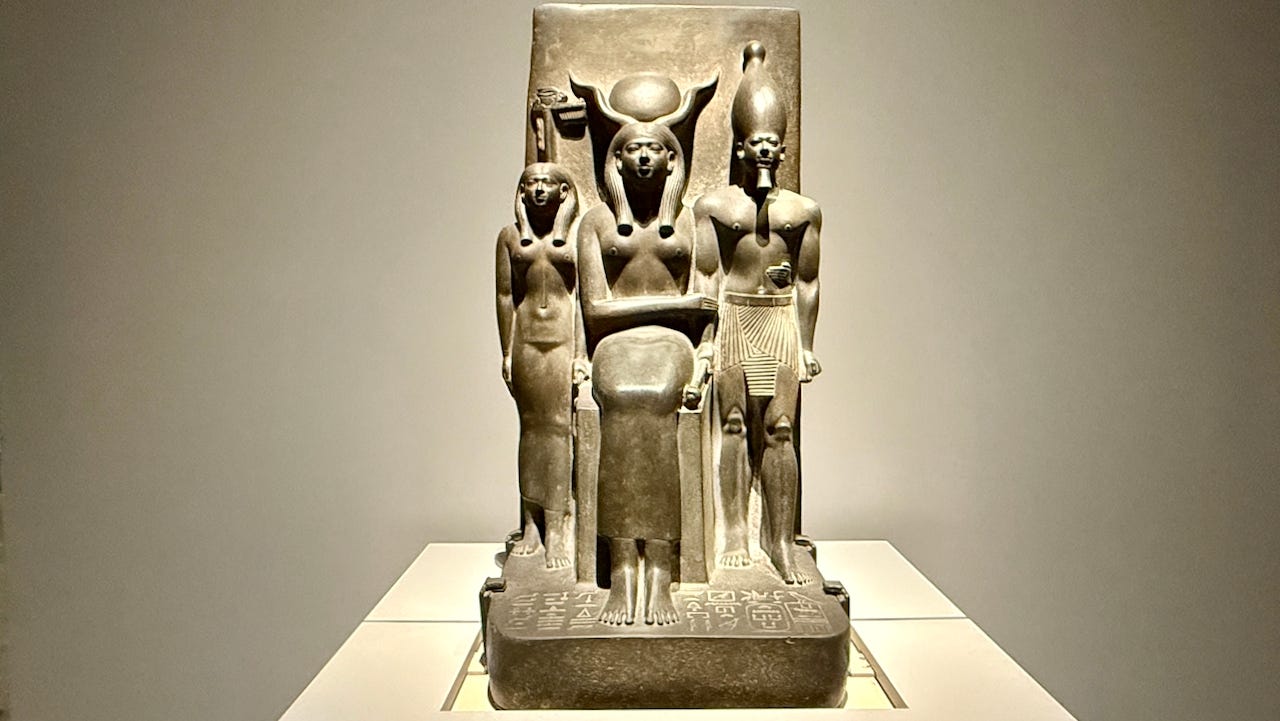
"Triad of Osiris, Isis, and Horus Third: This magnificent statuette depicts the family group fundamental to the mythology of ancient Egyptian kingship: shrouded and seated Osiris, falcon-headed Horus, and Isis wearing the sun disk and horns that often formed her head ornament in the first millennium BCE." - THE MET Osiris and Continuity After Fragmentation
Osiris is often summarized as resurrection. The deeper lesson is different.
Things break. And you still have to go on.
Osiris is not the promise that nothing breaks. Osiris is the question of whether what matters can be made whole again.
That is engineering thinking.
Reassembly. Integrity restoration. Meaning reconstructed.
Not denial. Not fantasy. A sober acceptance that fragmentation is part of life.
Let things break. Then build a way to reassemble what matters.
Hathor and Renewal Without Collapse
Then you meet Hathor and she teaches a different survival skill.
Hathor appears in many forms. That is not confusion. That is resilience.
Same function. Multiple interfaces.
Life does not stress you in one way.
Sometimes you need comfort. Sometimes you need protection. Sometimes you need courage. Sometimes you need a restart.
Hathor’s lesson is not “preserve everything.” Her lesson is that restart is sacred.
The world floods. The world resets. Something has to carry what matters through the chaos so creation can begin again.
This is not myth as fantasy. It is myth as a model for time.
Let collapse be part of the cycle. Then design renewal so collapse does not become the end.
Horus and Legitimacy After Conflict
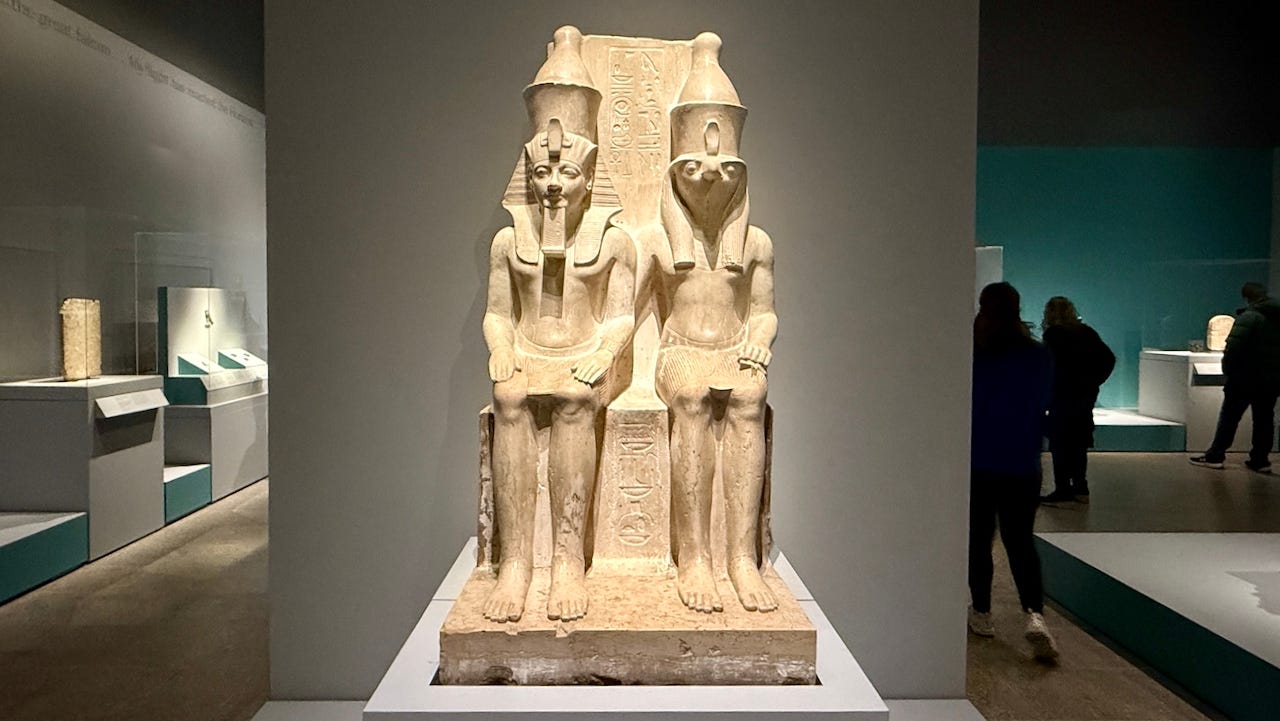
Horus is the opposite of Hathor in one crucial way.
Horus stays consistent.
Falcon. Crown. Kingship.
Authority cannot afford ambiguity.
When a system is shaking, when succession is messy, when conflict has happened, people do not need novelty. They need recognition.
They need to know this still holds.
Horus inherits rule after struggle. Greatness is not born clean.
Greatness is often inherited in imperfect conditions after disruption, after conflict, after disappointment.
Let your story include struggle. Then build legitimacy through alignment, not ego.
Succession and Functions Over Personalities
One of the sharpest lessons from Divine Egypt is this.
Greatness that survives time is attached to roles, not personalities.
Individuals change. Seasons turn. Leaders come and go.
A system can endure if its function is preserved.
This is engineering. It is also about emotional maturity.
Let the permanent-hero fantasy go. Start becoming a reliable carrier of a function that can outlast you.
Ra, Maat, and Ruling the Cosmos Through Process
Here is the idea that ties all of this together.
Egypt did not treat order as something you achieve once and then relax.
Order was maintained daily.
Ra (or Re) is born each morning. Crosses the sky. Descends into the underworld. Returns.
Again and again.
That cycle preserves Maat. Not morality in the modern sense, but systemic rightness. Balance. Alignment. Correctness.
This is the engineering truth that hits hard.
Greatness is not a peak. Greatness is maintenance.
You do not arrive. You govern a process.
Let order require upkeep. Then commit to the daily work that keeps your system intact.
Coping With Life and Why Greatness Must Be Reachable
Ancient Egyptians worried about the same things we worry about.
Health. Childbirth. Love. Competition. Fear. Uncertainty.
Some gods lived in restricted temple spaces. Most people needed a way to reach meaning in ordinary life.
The system made room for access.
Festivals brought the divine into public streets. Offerings and small figures brought the divine into personal proximity. Protective images lived in homes, at thresholds, and in bedrooms.
A system strong enough to govern the cosmos must also be gentle enough to help people cope on a Tuesday.
If your definition of greatness cannot touch ordinary life, it is not greatness. It is performance.
Koffeemocha and the Relay
Now I can say what this means for my own work.
Koffeemocha is not a monument. It is a relay.
I am not writing to freeze myself in place. I am writing to carry something forward.
Questions that matter. Values that stabilize. Ways of thinking that help people work with reality instead of fighting it.
I do not write assuming I will see the full outcome.
That is not weakness. That is design.
Let time be bigger than me.
Let the work be relayable.
The Whole Point
Egypt, at its best, was not a civilization of control.
It was a civilization of alignment.
It accepted ultimate reality, nature, time, death, uncertainty, and designed systems of continuity. Gods, symbols, roles, rituals, repeatable processes that helped ordinary people live inside what cannot be negotiated.
That is engineering greatness.
Space shows us where greatness stands.
Time reveals whether it deserves to remain.
So I am not chasing greatness that looks impressive.
I am chasing greatness that still works when I am not there to explain it.
Because greatness is not just a moment in engineering, in building, and in writing.
Greatness is what still holds, again and again, under time.